
CAD Design and Engineering: Best Practices for Manufacturing-Ready Products
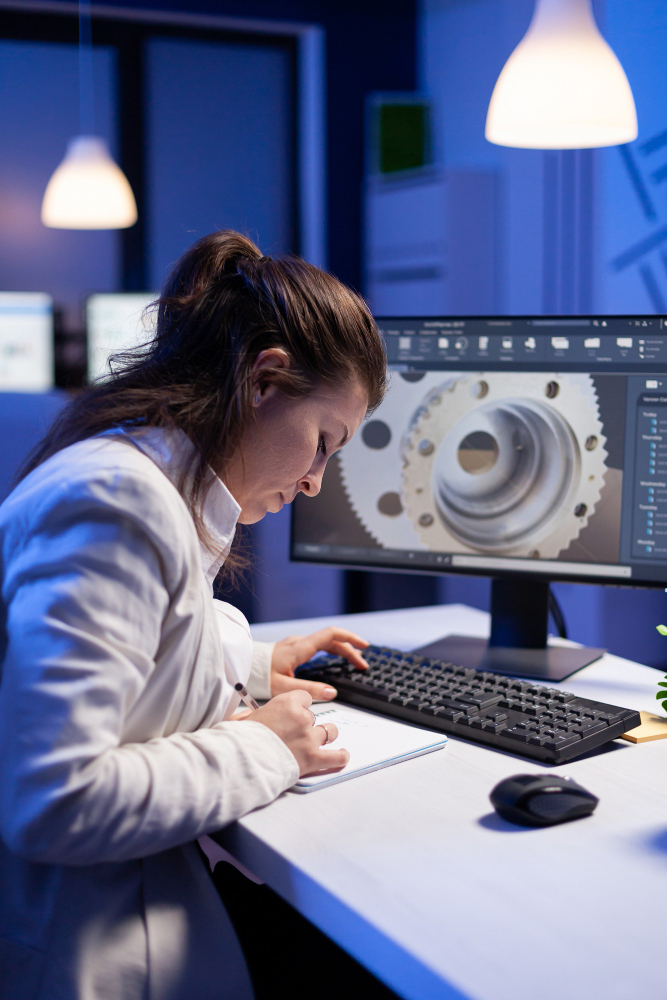
Computer-Aided Design (CAD) is more than a drafting tool — it is the foundation of engineering precision. In hardware product development, disciplined CAD modeling ensures manufacturability, assembly accuracy, and cost-effective production. This article outlines best practices that help engineering teams produce manufacturing-ready CAD models.
1. Start with Clear Specifications
Begin CAD work only after requirements have been thoroughly documented. Specifications should include:
- Target dimensions and tolerances
- Functional performance needs
- Material choices and constraints
Clear specifications reduce iteration cycles and help avoid rework later in the process.
2. Use Feature-Based Design Practices
Feature-based modeling enables more predictable edits and controlled complexity. Employ techniques such as:
- Parametric constraints
- Named features and consistent naming conventions
- Modular design structure
This improves model clarity and downstream manufacturability analysis.
3. Plan for Assembly Early
Even if individual parts are designed first, engineers should verify assembly conditions early. This involves:
- Interference checks
- Tolerance stack analysis
- Fit and motion simulations
Mechanical systems behave differently when assembled, and early checks prevent later errors.
4. Integrate DFM Considerations
Design for Manufacturing (DFM) principles ensure that parts are easy to produce. Include guidelines such as:
- Minimum feature size compatible with tooling
- Avoiding unnecessary complexity
- Optimization for machining or molding
Applying DFM early lowers production cost and reduces lead times.
5. Validate Before Prototyping
Model validation includes reviewing:
- Geometric dimensions and tolerances
- Material behavior simulations
- Assembly interferences
Catch model issues early to avoid costly prototype iterations.
Internal Linking
Learn more about the overall design workflow in Hardware Product Design Process: A Step-by-Step Engineering Guide. To understand sequencing and risk mitigation across stages, see End-to-End Product Engineering Explained.
Conclusion
Effective CAD design and disciplined modeling practices are essential for manufacturing success. By combining clear specifications, feature-based modeling, early assembly planning, and DFM integration, engineering teams can reduce rework, improve manufacturability, and support downstream production readiness.
